Climate Change
This theme assesses how our activities affect climate change and how we are reducing the physical risks linked to climate change.
Our Sustainability Strategy 2025/26-2030/31 sets out the long-term steps we will take to reduce carbon emissions across our homes, operations and neighbourhoods. It builds on our earlier carbon reduction work and gives us a clearer route towards net zero over time. The strategy focuses first on improving the performance of existing homes, supported by a delivery plan, cross-organisational oversight and close links to our Asset Management and Development strategies.
Improving the performance of existing homes remains a key priority. Our strategy aims for all homes, where viable, to achieve a minimum EPC C rating by 2030. This will help customers reduce energy use and manage household costs.
Of all homes built in 2025/26, 88% achieved a minimum of EPC B and 21% of new homes built in 2025/26 achieved EPC A.
Over the year, our Sustainability Team improved 705 homes from EPC band D to EPC band C. These homes are now more energy efficient, easier to keep warm and cheaper for customers to run. This work included delivery through schemes such as Warm Homes, alongside self-funded insulation and solar installations. Together with our planned investment programme and external funding, including the Warm Homes: Social Housing Fund, this is helping us continue to improve the energy performance of our homes across the life of the strategy.
These improvements help customers reduce energy use, improve comfort and manage household bills more effectively.
EPC ratings for our existing homes (As at March 2026):
Great Places continues to optimise heat networks to improve efficiency, reduce emissions and lower costs for customers.
This year, optimisation works were completed at Hutton Lodge (Manchester) and at Elk View and Tulloch Court in Blackpool. These upgrades delivered around a 40% reduction in heat losses, meaning warmer homes for customers and lower communal energy costs. Customers at these schemes now benefit from fairer, usage-based billing, improving transparency and control over energy costs.
The programme has been supported by the Heat Network Efficiency Scheme (HNES), which provided up to 50% match funding. A fully funded optimisation study was also completed at Windmill House, with a further study under way at Fernbank House.
Working with FairHeat, Great Places is continuing to expand its pipeline of improvement projects, with additional funding applications submitted for both optimisation studies and capital works. This ongoing programme strengthens performance across the portfolio and ensures readiness for upcoming heat network regulation.
Alongside this, the strategy includes action to improve data, develop a decarbonisation retrofit plan for every home, assess carbon emissions across our operations and build the skills, governance and partnerships needed to deliver long-term change.
Building colleague capability for climate action
Delivering our Sustainability Strategy relies on colleagues across the organisation understanding the role they can play in reducing carbon emissions and supporting climate resilience.
To build this capability, Carbon Literacy training forms part of Great Places’ corporate induction programme and is available to colleagues across the business. The training increases awareness of climate change, its relevance to social housing and the opportunities for action within individual roles and teams.
Through a mixture of practical learning, discussion and action planning, colleagues develop a better understanding of how their day-to-day decisions can contribute to Great Places’ sustainability objectives. As part of the training, participants commit to both an individual and a team-based low-carbon action, helping to embed sustainability into everyday practice and supporting delivery of our wider environmental goals.
Scope 1, 2 and 3 Greenhouse Gas emissions
Great Places measures its carbon footprint using the Carbon Workbook calculator and methodology developed by housing providers working with the Greater Manchester Combined Authority.
The methodology has been refined to include emissions from all homes served by third-party district heating within the Scope 3 existing stock category. This improves consistency and helps avoid double counting. While heat network optimisation has reduced gas consumption in some schemes, overall emissions have also been affected by growth in the number of homes built and managed during the year.
Scope 3 emissions make up the largest part of our footprint, reflecting the impact of existing homes, new development and wider value-chain activity. Our Sustainability Strategy therefore prioritises improving the energy performance of existing homes, strengthening data quality, developing retrofit plans and working with partners and suppliers to reduce emissions over time.
We recognise that carbon reporting will continue to evolve as data quality, methodology and sector practice improve. Future reporting will aim to show clearer year-on-year trends, explain the drivers of change and demonstrate how investment decisions are contributing to emissions reduction.
Great Places Housing Group Carbon Emissions 2025/26
| Scope | Source | Carbon emissions |
|---|---|---|
| Scope 1 | Great Places directly used gas consumption, fleet consumption, fugitive emissions |
2,782.10 |
| Scope 2 | Electricity consumption | 8.03 |
| Scope 3 | Existing stock energy consumption, new build, grey fleet, electricity transmission and distribution | 93,250.04 |
| Total emissions | 96,040.17 |
Priorities for 2026/27
- Continue EPC C programme
- Develop whole-stock retrofit plans
- Improve emissions reporting
- Expand heat network optimisation
Mitigating climate risks
Our development approach is aligned with the UN Sustainable Development Goals and our wider Sustainability Strategy. This helps ensure that new homes and places deliver social value, health and wellbeing benefits, climate resilience and environmental sustainability, while using consistent language and measures across our work.
We know development is not just about building homes. It is about creating communities that are resilient to future climate impacts and affordable to live in over the long term, allowing:
- Lower energy bills for customers
- Reduced risk of fuel poverty
- Healthier, more comfortable living environments
Our approach to sustainability aligns directly with our social housing purpose by supporting long-term affordability, improving quality of life and reducing the need for more disruptive retrofit work in the future.
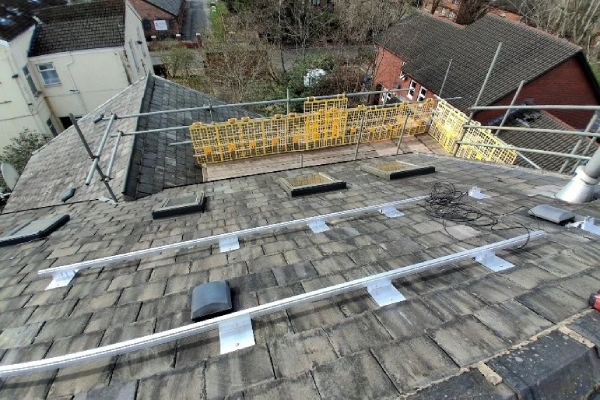
We prioritise low-carbon technologies such as air source heat pumps and solar panels, alongside efficient lighting, ventilation systems and design choices that support lower energy use.
Engaging customers on ventilation, heating and recycling
We take a design-first approach, using practical measures to reduce risk across our developments. New homes are designed to be located in the lowest flood risk category wherever possible. Where sites include higher-risk areas, we reduce exposure through layout changes, ground-level design or by using these areas as public open space.
Garden drainage for each plot is assessed based on geological information and visual inspections during construction, helping reduce the risk of standing water and supporting long-term property performance.
We manage surface water carefully using Sustainable Drainage Systems (SuDS), including:
- Oversized pipes, swales and balancing ponds
- Permeable paving to reduce run-off
- Landscape design that responds to increased rainfall
These measures are supported by our wider design standards, which require developments to consider flood resilience, surface water management and long-term climate impacts from the outset.
To reduce overheating, we focus on the performance of the building fabric and passive design. This includes:
- High levels of insulation and airtightness to limit heat gain and loss
- Designing homes around orientation and window placement
- Ventilation systems such as mechanical ventilation with heat recovery (MVHR)
- Shading and glazing choices that balance daylight with thermal comfort
We assess overheating risk using dynamic modelling to make sure each home performs as intended. Mechanical cooling is only used where these measures are not enough.
We continue to improve our designs through feedback from customers, colleagues and partners. This helps ensure our homes are comfortable, resilient and ready for future climate conditions, while supporting healthier living environments, financial resilience and reduced future retrofit requirements.
Supporting customers to manage their homes
We know customers play an important role in how homes perform day to day, so we focus on making things easy to understand and manage.
We provide clear, practical information to help customers use their homes efficiently. This includes advice on heating, ventilation, recycling and reducing moisture to prevent damp and mould.
Customers can access support through:
- Straightforward written and video guidance on our website
- Printed information where needed
- Advice from our customer-facing teams
When customers move into a new home, we provide a Home User Guide in digital (written and video) and printed formats; digital written guides can be easily translated into many different languages to support equality, diversity and inclusion. The guide explains how to use core systems, including heating, ventilation and other electrical installations. We also offer a home demonstration and follow-up support to make sure customers feel confident managing their home.
Our homes are designed to support this, too. We use simple, reliable systems and aim to avoid unnecessary complexity, so homes are easier to run and maintain.
We also include features that help customers manage their homes more effectively, such as:
- Smart meters and in-home energy displays to track energy use
- Efficient fixtures and fittings to reduce water use
- Clear storage and recycling arrangements to support dayto-day living
Alongside this, we provide practical guidance on:
- Using heating systems efficiently
- Managing ventilation and airflow
- Maintaining boilers, drainage and outdoor spaces
By keeping our approach simple and consistent, we help customers feel confident managing their homes while supporting our wider sustainability goals.
Case studies
Warm Homes programme improves energy efficiency in Wybourn Anchor Neighbourhood
In our Wybourn Anchor Neighbourhood, Great Places launched a Warm Homes programme to improve the energy efficiency of homes and support customers through rising energy costs.
The programme will upgrade more than 300 properties over a three-year period, delivering a range of improvements including insulation, ventilation and low-carbon technologies to enhance energy performance and comfort.
These measures will help customers live in warmer homes while reducing energy consumption and household bills. The programme also contributes to Great Places’ wider commitment to achieving EPC C across all homes and supporting the transition to net zero.
Customer engagement has been central to the approach, with events providing opportunities for customers to learn about the improvements, ask questions and feel confident about the changes to their homes.
This initiative demonstrates how targeted retrofit investment within our Anchor Neighbourhoods can deliver environmental and social benefits, improving quality of life while reducing carbon emissions.
Climate Minister visit showcases sustainable homes and retrofit innovation
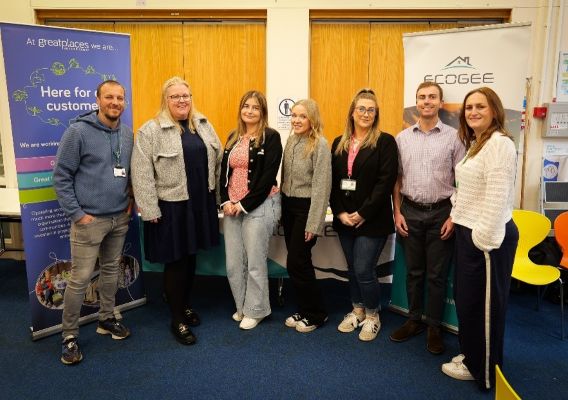
Great Places played a key role in hosting a visit from the Climate Minister to showcase new and retrofitted eco homes across South Yorkshire, highlighting how housing providers are contributing to the transition to a low-carbon future.
The visit included examples of both new-build and retrofit homes, demonstrating how a combination of technologies such as air source heat pumps, solar panels and electric vehicle charging can reduce carbon emissions and energy costs.
Alongside this, retrofit work within existing neighbourhoods showed how large-scale improvements to heating systems and energy performance can make homes warmer, more efficient and more affordable to run.
Winter support helps customers stay warm and reduce energy costs in Richmond Park
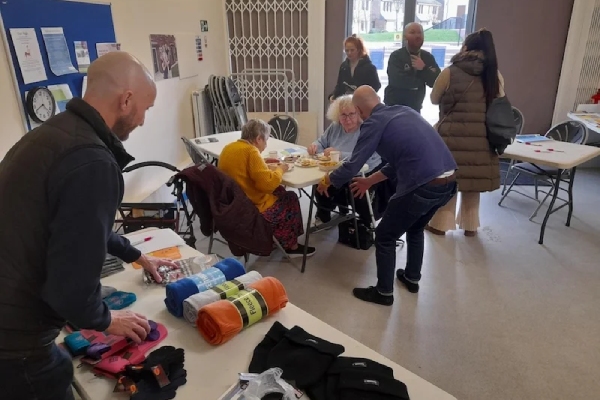
In Richmond Park, Sheffield, Great Places brought together Community Investment and Financial Resilience teams to support customers in staying warm and managing energy costs during the winter months.
Through a series of community drop-in sessions, customers received practical support including winter warm packs, access to hot meals and tailored advice on reducing energy use and improving household finances.
Specialist guidance covered topics such as switching energy tariffs, accessing grants, managing fuel debt and improving energy in the home. Customers were also connected to partner organisations providing additional home visits and longer-term support.
The initiative helped to build awareness of available services while encouraging residents to take practical steps to stay warm and reduce costs. It also strengthened links between customers and support networks within the community.
This work demonstrates how combining environmental initiatives with financial and wellbeing support can help tackle fuel poverty, ensuring customers benefit from warmer homes while using energy more efficiently.