
Our Sustainability Strategy
The current ‘Carbon Reduction Strategy’ was adopted in 2021 and has largely delivered its objectives during what has been a continually changing operating environment. The Strategy focused on understanding our assets, awareness raising amongst colleagues, trialling and testing new technologies and starting the journey towards delivering EPC Level C across our existing homes.
This Sustainability Strategy reflects the many changes in legislation seen over recent years as well as providing the framework for responding to the upcoming challenges on the horizon such as changes to the Decent Homes Standard, implementation of Awaab’s Law and the Minimum Energy Efficiency Standards (MEES) regulations, requiring homes to meet minimum EPC ratings before they can be let.
This ‘Sustainability Strategy’ will cover the period to 2030 in order to align with our ambition to achieve EPC Level C across our homes. The Strategy is part of a family of strategies that dovetail together to form a cohesive approach to ensuring our activities are conducted responsibly, ethically and in a financially sound way.
The Strategy will align with the Asset Management Strategy and the Affordable Development Strategy and is driven by a number of strategic objectives, measured through clear targets, and underpinned by a detailed action plan.
The Strategy will establish the long-term road map for delivery of Net Zero Carbon across Great Places activities covering our homes, our operations and our open spaces.
Background
The Government’s target is to achieve Net Zero by 2050 although this differs from both regional and local authority targets which aspire to deliver this much sooner.
The table below highlights Great Places EPC performance from April 2021 to December 2025:
| Performance | April 2021 | April 2025 | December 2025 |
|---|---|---|---|
| No of homes EPC and above | 67.48% | 83.11% | 87.47% |
| No of homes below EPC C | 21.61% | 15.79% | 12.14% |
| No of homes without an EPC | 10.91% | 1.09% | 0.39% |
As at December 2025, there has been a 20% improvement in the number of homes that have reached EPC C. 87.47% (16,104) of homes had reached EPC C and above; 12.14% (2,235) were below EPC C and 0.39% (72) did not have an EPC.
The Strategy positions Great Places to make the targeted, long-term investments required to achieve EPC Level C, respond proactively to evolving legislative requirements, and establish a clear pathway to Net Zero Carbon. Through this strategic direction, we will enhance the energy performance of our homes and improve long-term affordability for our customers.
During the period of the Strategy, we will build on our experience to date with regard to developing technologies (e.g. solar PV, air source heat pumps, etc.) and further test new and emerging technologies (e.g. battery storage) whilst ensuring that customer engagement and involvement is at the heart of our decision-making.
In line with our Corporate Plan – ‘Here for our Customers’, the strategy aligns with the priorities and activity set out in the Corporate Plan and is also aligned to the Sustainable Development Goals (SDGs).
The strategy articulates the range of requirements on Great Places as a large landlord and complex property business and blends these into a set of coherent objectives, actions and measures to ensure that we deliver a comprehensive, active asset management approach that reflects the needs of our customers.
We will achieve this by focusing on the delivery of five objectives, supported by a number of core strategies (e.g. Asset Management Strategy, Customer Experience Strategy and Affordable Development Strategy) to deliver a seamless approach to effective asset management and the provision of an excellent customer experience.
Context
Net Zero Carbon represents a longterm commitment to balancing the greenhouse gases we emit with those we remove from the atmosphere. Achieving net zero emissions reflects a position where carbon output has been reduced to the lowest practicable level, with only unavoidable residual emissions remaining.
The Government has legislated for the UK to reach net zero carbon emissions by 2050, with intermediary targets of a 68% reduction by 2030 and 78% reduction by 2035. Guidance from the Climate Change Committee (CCC) makes clear that the decarbonisation of housing stock is central to meeting these goals.
The pathway to net zero homes is focused on a comprehensive programme of retrofit and energy efficiency improvements across all existing housing. Key milestones within this pathway include:
- Ensuring all homes achieve a minimum rating of EPC C or better by 2030.
- Delivering zero-carbon ready new homes in line with the Future Homes Standard.
- Transitioning all homes to non-fossil fuel heating by 2050.
This is complemented with reducing our carbon footprint for our operations and improving our environmental performance which is covered within the strategy.
Resource to deliver the Strategy
Within the current Business Plan, there is an ‘Affordable Warmth’ provision of circa £15.5mil taking us to year 2030, to carry out ‘Sustainability’ activities, including provision to reach EPC Level C in our existing homes to pave the way to achieve Net Zero Carbon.
The financial requirements will be continually reviewed as our data improves, technology evolves and the costs of interventions change. With the right expertise and capacity in place, the Asset function is well positioned to ensure effective delivery of the Sustainability Strategy.
Strategic & Performance Driven
Great Places has strengthened its strategic position by advancing key objectives critical to delivering our Sustainability Strategy, including:
- The implementation of SHIFT (Sustainable Homes Index for the Future) Assessment
SHIFT is an independent assessment and accreditation scheme, and sustainability standard for the housing sector. Following Great Places first Sustainable Homes Index for the Future (SHIFT) assessment, we achieved Silver accreditation, which we will build on with the aim to move to Gold and then Platinum.
- The implementation of SHAPE (Social Housing Asset Performance Evaluation)
A key part of the strategy is the implementation of the Asset Performance Evaluation model which will assess the financial and social performance of our assets in order to support informed decisions around stock sustainability.
Within the model, the environmental performance of properties will be captured, providing energy and carbon performance and the anticipated fuel spend of homes based on component information. The model will also enable scenario planning to review the interventions and measures required (including the associated costs) to meet Net Zero Carbon (NZC). This will enable Great Places to further target interventions to help meet local, regional and national targets and also review those homes that have the lowest EPC rating where achieving EPC Level C and NZC may not be financially viable.
- Delivery of Stock Condition Surveys
Data is key to enabling us to focus on the right investment in the right places at the right time that meets the needs of both our customers and the business. To support this, over the next 5 years, Great Places will carry out stock condition surveys to reach and maintain 100% stock condition and capture RdSAP data, ensuring EPC data is updated and to inform where energy efficient measures are needed to improve thermal efficiency within the home. Appendix 1 highlights the further progress made.
Aims & Objectives
The Strategy is set out under five core objectives. Together these set out our approach to delivery of the Sustainability Strategy and include:
Delivering a sustainable future
- Make our existing homes energy efficient and affordable
- Minimise the environmental impact of our new homes
- Reduce our operational impact on the environment
- Deliver improved living conditions for our customers
- Develop a sustainability culture
The Strategic Objectives will be achieved through a number of linked actions that are detailed within the Sustainability Action Plan. The key activities include:
- Continuation of the ‘SHIFT’ assessment to understand the full environmental impact of the organisation and delivery of the resulting Action Plan.
- Development of a clear and costed Net Zero Carbon Road map.
- Reviewing our Facilities Management strategy for our office portfolio.
- Developing a low carbon culture amongst our colleagues.
- Developing our approach to procurement and supply chain management.
- Developing the ‘green skills’ and capacity required to deliver Net Zero Carbon.
- Engaging and involving customers.
One of the core objectives of this strategy is to reduce the energy consumption and carbon impact of our homes through retrofit of insultation and low carbon energy measures. We have set a target for all homes to achieve a minimum energy efficiency rating of EPC C by 2030.
In addition, the strategy sets out steps to ensure that the embedded carbon in our homes is protected by extending the useable life of components through increased planned preventative maintenance programmes, reducing the need for early replacement of components.
Sustainable Development Goals (SDGs)
The SDGs are a collection of 17 global goals, designed to be a blueprint to achieve a better and more sustainable future for all.
Great Places will incorporate the SDGs (where relevant) into the Strategy, to not only support the delivery of the actions within the strategy, but to also address linked issues such as tackling poverty that go hand in hand with improving heath/education and tackling climate change.
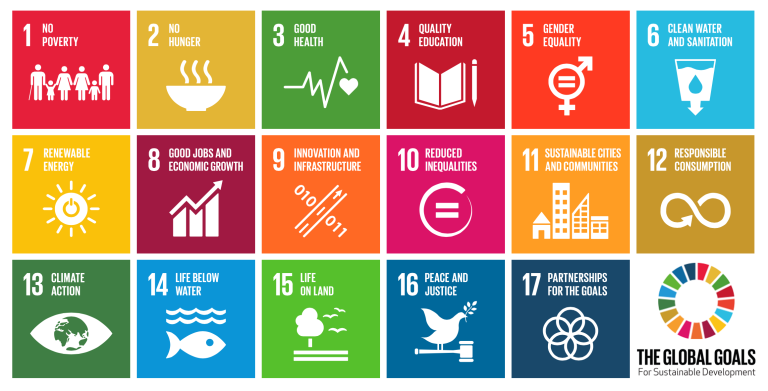
* Accessible version at the end of this section
1. Make our existing homes energy efficient and affordable
We will ensure that all homes, where financially viable, achieve a minimum energy performance of an EPC C by the end of 2030. Whilst this is one of the key milestones in the journey to net zero carbon, it means that we move all homes to a minimum standard across our portfolio and helps our customers to manage the cost of heating their home.
Work has already been completed to meet this target, with 600+ homes that have received improvement measures to achieve an EPC C under Wave 2 of the Social Housing Decarbonisation Fund (SHDF). Further funding from the Warm Homes – Social Housing fund alongside our self-funded programme will enable close to 2,000 further to homes move to EPC C during the life of this strategy whilst also ensuring that 100% of our homes achieve the Decent Homes Standard, are free from damp and mould and wider hazards, and that we provide a safe, warm and affordable home.
A key part of both the Sustainability Strategy and the Asset Management Strategy is the implementation of an Asset Performance Evaluation model through which we will assess the financial and social performance of our assets in order to support informed decisions around stock sustainability. This will include an assessment of Net Present Value (NPV).
The results of this work will inform our developing approach to delivery of targeted interventions, such as disposals, redevelopment and master-planning the regeneration of estates, linking closely with the Affordable Development Strategy. This will ensure that decisions provide value for money and look for alternative uses for properties that no longer meet our requirements or cannot meet the required standards
Within the model, the environmental performance of homes (and associated costs) will be captured providing energy and carbon performance, including anticipated component spend on homes, through the implementation of new energy modelling software This will enable Great Places to further target interventions to meet local, regional and national targets.
2. Minimise the environmental impact of our new homes
Developers are increasingly turning to eco-friendly options and materials within new developments, using sustainably sourced timber, recycled metal, low volatile organic compound paints, etc. to reduce the environmental impact of construction, and to ensure that homes are sustainable in the long term.
To create high quality homes and thriving places, whilst preserving natural capital and being governed by planning policy, Great Places will review our approach to biodiversity net gain within development, making sure that habitats for wildlife are enhanced or created where habitats are lost to encourage ecosystem diversity.
Whilst conforming to building regulations, all new homes are built to EPC B and above, including homes built off gas. Improved air quality and incorporating mechanisms to monitor and control heating within homes are also included. We incorporate Solar PV on houses and cottage flats, over and above Part L 2021 compliance. We do this for our off-gas homes with Air Source Heat Pumps, to provide our customers with energy bills equivalent in performance to a home fitted with a gas boiler.
We also seek opportunities to reduce embodied carbon and construction material waste through Modern Methods of Construction (MMC).
The proposed design and performance specification for new homes is to achieve a 60% improvement in total CO2 emissions and a 20% improvement in total primary energy consumption when compared to the 2021 Part L building regulations requirements. This is achieved through high performing building fabric and low carbon technologies.
Linked to the Future Homes Standard, our Development Team will look at the best ways to harness the use of technology to drive energy efficiency and customer comfort. We will consider the type and specification of new technology, including trialling and investing in environmental and home monitoring devices and building management systems that will help customers to manage conditions within their home.
3. Reduce our operational impact on the environment
To quantify the savings required to reduce the operational impact on the environment, we need to be able to accurately record the carbon footprint of our offices, operations and environment by identifying scope 1, 2 and 3 emissions.
Scope 1, 2, and 3 emissions are a Green House Gas (GHG) Protocol framework used to categorise the full carbon footprint of an organisation. Scope 1 covers direct emissions from owned or controlled sources (e.g. burning fuel), Scope 2 covers indirect emissions from purchased energy (e.g. electricity), and Scope 3 covers all other indirect emissions throughout the value chain. Understanding these will allow us to quantify and manage our entire carbon footprint.
We aim to reduce the environmental footprint of our operations, improve our environmental impact, reduce running costs and enhance overall operational performance. Research has shown that there is a positive contribution from our greenspaces on the environment and the health outcomes of our customers, beyond the curtilage of our homes.
To support this, the actions included within the sustainability action plan to monitor and drive progress include:
- Identify scope 1, 2 and 3 emissions across our operations.
- Development of an environmental framework and delivery plan to ensure that opportunities within green spaces is maximised (including biodiversity).
- Development of a waste and recycling policy.
- Review of water efficiencies within offices.
- Review of our fleet to identify efficiencies that can be achieved and adopt more sustainable ways of travel.
- Implement Supply Chain Sustainability School training for our supply chain and contractors to help identify environmental impacts resulting from their operations, and where they can put actions in place to mitigate those impacts.
4. Deliver improved living conditions for our customers
With an increasing need for accurate robust data to inform investment decisions, our focus will be to develop mechanisms for measuring and monitoring energy and carbon performance. This will be achieved by implementing energy modelling software and improving our energy data, which will enable us to develop a decarbonisation retrofit plan for every home.
Processes and approaches to customer engagement, including educating customers on new technologies, will be developed to ensure that information, communications and engagement is customer focused and accessible. This will provide a platform for providing support to customers in managing conditions within the home and help with reducing energy consumption and associated costs.
A review of our waste and recycling processes will be carried out to inform a new policy focusing on homes, our operations and environment. Ensuring that we adopt the waste hierarchy principles of reduce, reuse and recycle. This includes reducing waste that goes to landfill, providing options for reuse and recycling so that customers can dispose of bulky waste and to help prevent fly-tipping.
We have nearly 1,000 customers receiving heating and hot water from forty heat networks that we own and manage. A heat network (district or communal heating), distributes heat from central energy sources to more than one property. The benefits include increased efficiency and lower energy bills for the customer whilst reducing carbon emissions. Our heat networks will be reviewed to identify where efficiencies can be made and we will utilise internal and external funding opportunities to provide the investment required.
A ‘heating strategy’ will be developed, the goal being to ensure that we are prepared and compliant for the upcoming changes in heat network regulations and compliance requirements. Included in the heating strategy will be our long term ambition for the decarbonisation of the networks; the installation of meters across relevant schemes and clear tariff setting to ensure our customers energy costs are fair and affordable.
5. Develop a ‘Sustainability’ culture
Great Places has a well-earned reputation for promoting sustainability and during the life of this strategy will aim to build upon and further develop this work.
The development of the new Sustainability Strategy Group will lead, manage and monitor the delivery of the strategy with support and engagement from all parts of the business. Regular updates on progress with delivery of the Strategy will be provided to colleagues, the Executive team and Board.
The Sustainability Action Plan provides clear measurable actions to support the delivery of the strategy and incorporated into the action plan are the recommendations of our SHIFT (Sustainable Homes Index for the Future) assessment.
To gain an understanding of our commitments to reducing our carbon emissions, gain carbon literacy competency and adopt advancing sustainability practices across the organisation, we will review our approach and mechanisms to learning including, investing in learning and development for colleagues, customers and our supply chain.
This will help enhance sustainability skills and ensure that we have a workforce that is equipped with the skills fit for the future and that we support behavioural change within our customer base.
As we continue to invest in our properties to ensure that homes are well maintained, we recognise that the current Decent Homes Standard provides a low baseline and does not take into account wider aspects that will support tenancy and neighbourhood sustainability.
We will work with our customers and teams across Great Places, to establish a Great Places standard building on the wider aspirations of our customer base and aligning with the Affordable Development Strategy. The Great Places Standard will consider energy and carbon efficiencies, reducing fuel bills for customers and deliver environmental improvements, encouraging greater biodiversity in our green spaces.
Our approach to future investment, is to develop an integrated model incorporating energy and carbon efficient measures (including flood prevention) into planned investment programmes (and within specifications or works for repairs and voids). To support this, energy modelling software will be utilised to help profile retrofit works.
Critical throughout, will be to build on existing communication platforms to engage and communicate with our customers. Partnerships will continue to be developed with Greater Manchester and South Yorkshire Combined Authorities and other key stakeholders to maximise funding share best practice within our neighbourhoods.
Accessible version of Global Goals
- No Poverty
- No Hunger
- Good Health
- Quality Education
- Gender Equality
- Clean Water and Sanitation
- Renewable Energy
- Good Jobs and Economic Growth
- Innovation and Infrastructure
- Reduced Inequalities
- Sustainable Cities and Communities
- Responsible Consumption
- Climate Action
- Life Below Water
- Life on Land
- Peace and Justice
- Partnerships for the Goals
How we will involve customers
Customer experience must inform decision-making and shape our services. In addition, wherever possible we will adapt to take account of their specific requirements.
Great Places will review the services that we offer customers to help design out fuel poverty, reduce CO2 emissions and improve energy efficiency within homes. In addition a communications and engagement plan will be developed to ensure that key stakeholders receive and are signposted to relevant information and where to receive support including training on the use of ‘systems’ and controls within their home.
Examples of the support we will provide include:
- Support with fuel switching.
- Signposting customers to access other funding mechanisms.
- Communications on the effective use of their heating.
- Better provision of advice on energy efficiency to new customers.
- Development of community engagement mechanisms and awareness campaigns (including establishing Customer Sustainability Champions).
- Training and advice on energy, carbon efficiency and sustainable behaviours including recycling, reducing waste and minimizing the use of natural resources will also be developed.
- We will also maximise data on the home and household profile to identify where interventions can be targeted.
We are also committed to:
- Ensuring customer requirements are understood
- Making appropriate service adjustments wherever possible
- Using existing engagement routes and adapting where required, to understand customer views as we develop services, procure contractors and deliver works.
- Ensure that our policies and procedures are fair and equitable.
- Utilise customer feedback to continually monitor and improve performance.
How we measure success
The success of the Strategy will be measured through the following Key Performance Indicators (KPI’s) with annual reviews to ensure delivery of strategic outcomes.
| Year | 2025/26 | 2026/27 | 2027/28 | 2029/30 | 2030/31 |
|---|---|---|---|---|---|
| Operational Performance Indicator | Year 1 target | Year 2 target | Year 3 target | Year 4 target | Year 5 target |
| Homes energy performance rating EPC C or above | 89.94% | 92.69% | 94.83% | 97.42% | 100% |
| Per cent homes retrofitted (incl. WH-SHF funding) | 3.48% | 2.75% | 2.15% | 2.59% | 2.81% |
| SHIFT Accreditation achievement | Baseline | Silver | Gold | Gold | Platinum |
| Per cent of staff able to demonstrate competency in carbon literacy | 25% | 50% | 75% | 100% | 100% |
| Per cent carbon literacy platform established for customers and key stakeholders | – | – | – | 100% | 100% |
| Per cent of new homes built to EPC B or above | 92% | 92% | 100% | 100% | 100% |
| Per cent of new homes built to EPC B or above | – | – | 100% | 100% | 100% |
Value for money
The main costs associated with the delivery of this strategy can be split into three areas:
- Meeting the increased legal and regulatory standards.
- Resourcing, including funding requirements.
- Enabling projects.
In terms of meeting the increased legal and regulatory standards, the main costs are associated with the following activities:
- Achieving EPC C by 2030.
- Net Zero Carbon.
- Meeting the anticipated OfGEM technical standards for heat networks.
- Incorporating regulatory changes to the Decent Homes 2 Standard and Minimum Energy Efficiency Standard.
- Implementing the requirements of Awaab’s Law.
Performance monitoring
This strategy will continue to operate within the delegations set out in the code of Governance which includes:
- A group Board for Great Places Housing Group incorporating Great Places Housing Association and Plumlife Homes.
- The Customer Committee, a standing committee of Great Places’ Board, which adds value by providing lived experience and expertise directly from customers.
- The Audit and Assurance Committee to oversee performance against our standards, including oversight of audit activity
- A senior management team of executive and service area directors who manage the day-to-day operations and oversee monthly performance.
Updates will be provided to Board through the Great Homes report with regular updates to the Customer Committee. In addition, operational delivery will be monitored by the Sustainability Working Group and key stakeholders focused on delivering the action plan, with strategic oversight of performance provided by the Sustainability Strategy Group that is attended by senior leaders from across the organisation.
Performance monitoring of this strategy will be carried out in the following ways:
- Quarterly reporting against performance measures.
- Quarterly financial forecasting against budget.
- Twice annual Great Homes reports to Board.
- Periodic review by the Customer Committee.
We will also continue to utilise internal audits, customer feedback, and sector best practice to drive continuous improvement. This will include expanding our third-party audits across all major activity.
Implications for customers
This strategy centres on improving our understanding of our properties and our customers, to enhance the customer experience, business effectiveness and reduced organisational and customer costs. The implications are therefore positive:
- Improved property conditions.
- Better targeted investment.
- Reduced repairs.
- Increased customer safety.
- Improved customer experience.
- Significant engagement in shaping services and monitoring delivery of the Strategy.
Equality & diversity implications
This strategy compliments the wider work of the organisation to provide services that meet the diverse needs of our customers. There are two strands to this:
- Understanding our customer needs.
- Informing our service by listening to our customers views.
The strategy sets out a number of tangible ways in which we achieve this. Through improved data about the requirements of each household and ongoing engagement in respect to feedback and monitoring. The strategy covers all of our assets and all of the customers that live in our homes.


